
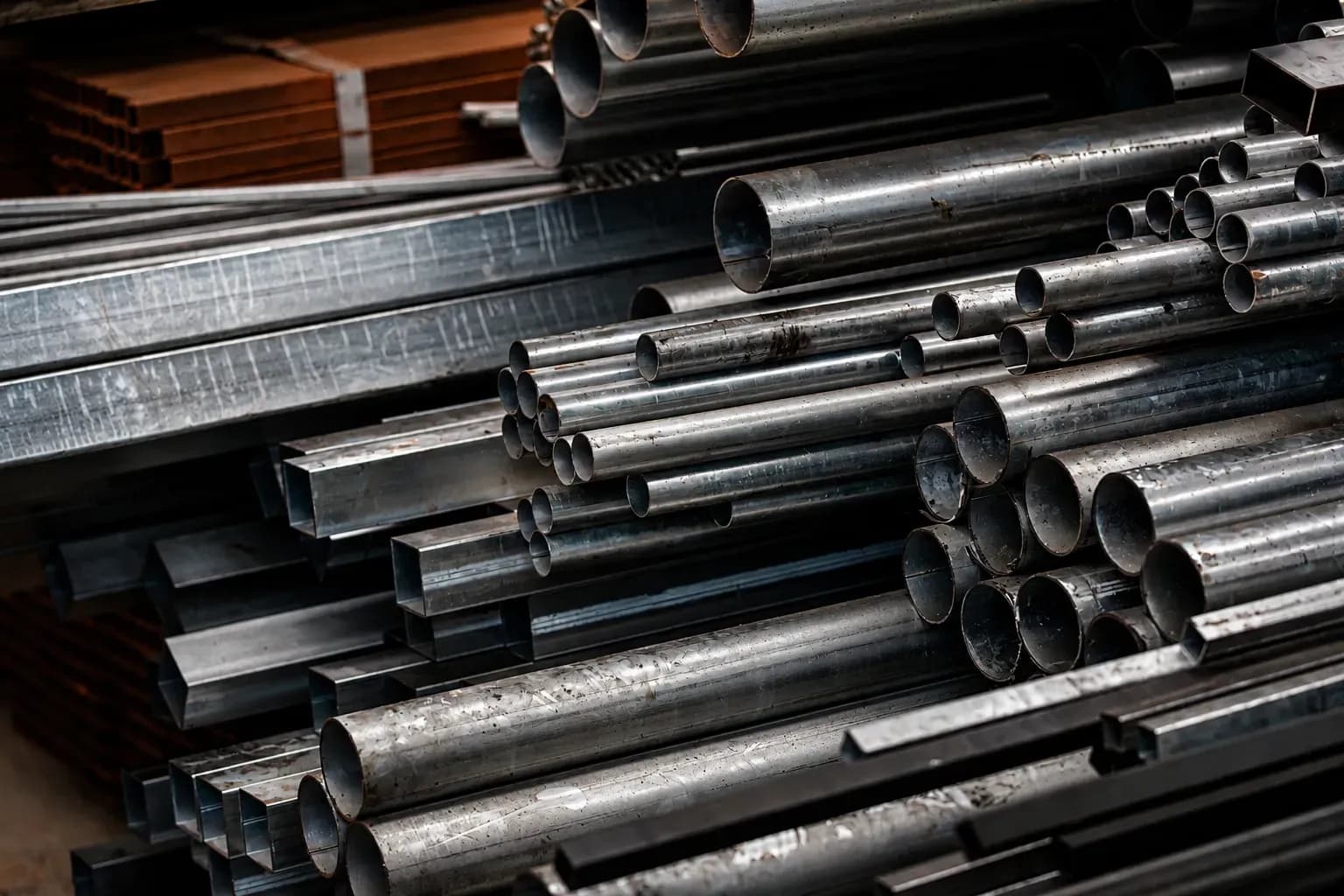
Downgraded Steel Sheet and Tube: When Is It Worth Buying?
Steel without a certificate is not steel without quality. We explain what leads material to be downgraded and where it makes sense to use it.
There is a common confusion in the market between two very different things: material without a certificate and material without quality. The former is a documentation issue. The latter is a performance issue. In the vast majority of cases, downgraded steel delivers the exact performance required by the application.
What Is Downgraded Material?
It is steel produced in a steel mill that, for some reason, does not fully comply with the specification under which it was manufactured — or that, while complying, lost the documentation traceability required to prove it. It is not scrap. It is material coming from the same line, furnace, and coil as prime material, separated for reasons that often have nothing to do with its strength.
The most common reasons are:
Thickness variations outside contracted tolerances, though still perfectly usable;
Mechanical property variations unconfirmed by testing, leaving the steel grade undocumented;
Galvanizing defects — irregular coating thickness, spots, appearance variation, poor adherence points;
Surface marks, coiling scratches, light storage oxidation, edging irregularities;
For tubing: concavity or irregularities in the weld seam;
Coil ends, transition material between runs, or leftovers from cancelled orders.
Notice what these defects share in common: almost all relate to appearance, dimensional tolerance, or documentation. None of them transform structural steel into fragile material.
Why Does It Cost Less?
Because the market pays a premium for guarantees, not just the material. Prime choice steel comes with an inspection certificate — typically EN 10204 3.1 — documenting the chemical composition and mechanical properties of that batch. This document is essential in certain applications and allows the buyer to transfer liability. When absent, the price reflects it. The difference is substantial, creating an opportunity: for any application not requiring certification, the buyer is paying for a document they do not need.
Where Does It Make Sense to Use It?
Downgraded material is suitable whenever the application is not subject to regulatory certification requirements and aesthetics are not critical. In practice, it covers a significant portion of industrial demand: agricultural and livestock structures, fencing and railings, supports, workbenches, factory auxiliary structures, shuttering and temporary site structures, technical furniture, jigs and positioning tools, prototypes and test runs, parts to be coated or embedded, and cutting work where localized defects can simply be bypassed during nesting.
What to Ask Before Buying
Request a concrete description of the defect, not just the "downgraded" label: knowing whether the issue involves galvanizing, thickness, or welding changes the decision. Confirm if the defect is consistent across the batch or localized, as a localized defect can be removed during cutting. Verify actual dimensions rather than nominal ones. Ask to see the material or request a sample. And do the math right: it's not the price per tonne that matters, but the cost per usable part.
Beyond Price: An Environmental Argument
The waste management hierarchy prioritizes reuse over recycling, for good reason. Using a batch of downgraded steel in an appropriate application avoids full remelting — along with the energy consumption and emissions involved. Buying downgraded material is not just a cost decision: it keeps existing steel in service rather than returning it to the furnace.
At MJD
We trade downgraded steel — sheet and tube, coated and uncoated — always with clear identification of the defect involved and zero ambiguity regarding the absence of a certificate. We never sell uncertified material as certified.
Through our Cutting Centre, we can also supply pre-transformed material tailored to your application, utilizing the prime areas of each batch and reducing waste on your end.
Contact us with your specific needs — dimensions, quantity, and application — and we will frankly advise whether we have suitable material or if your project requires certified material.
orcamento@mjd.pt
Share this article